

England, one of the four countries that make up the United Kingdom, captivates people with its rich culture, appreciation for nature, and commitment to education. Home to some of the world’s most prestigious universities—such as Oxford, Cambridge, and the London School of Economics—England stands as a global hub for learning and academic excellence.
However, what truly enchants visitors is not just its education, but also its history and magnificent architecture. Every city in England carries the scent of history, with streets lined by buildings that reflect different eras. From Gothic cathedrals and medieval castles to Victorian houses and sleek examples of modern architecture, England seamlessly blends the old with the new.
With a population of around 58 million, England is also a multicultural society, home to people from all over the world. This diversity enriches every aspect of life—from cuisine and art to music and daily traditions. Every corner of England tells a story, offering visitors a unique glimpse into how the country’s past and present coexist in perfect harmony.

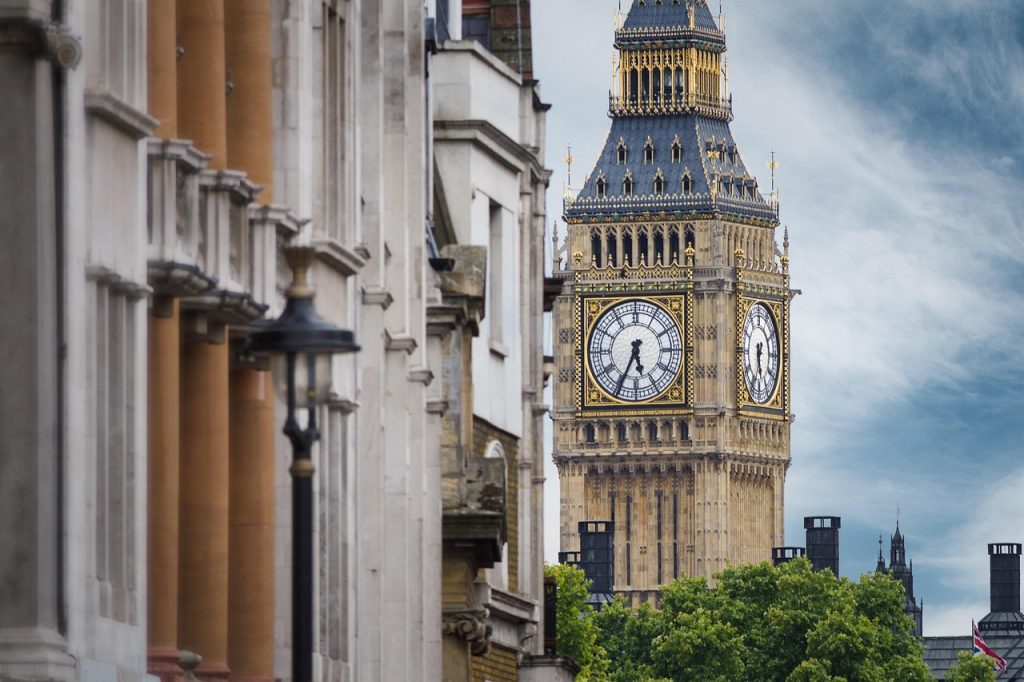
Big Ben (Elizabeth Tower): The Timeless Symbol of London
Standing proudly beside the Palace of Westminster, Big Ben is not just a clock tower—it’s one of London’s most enduring symbols and a masterpiece of Victorian engineering. The original tower was built in 1288, but after a devastating fire in 1834 destroyed much of Westminster Palace, a new Neo-Gothic tower was commissioned. Designed by architect Charles Barry and completed in 1859, the structure rises 96 meters above the Thames and remains one of the most photographed landmarks in the world.
Inside the tower, the massive bell known as Big Ben weighs an incredible 13.7 tons, while each clock face is 7 meters in diameter. The clock mechanism, designed by Edmund Beckett Denison and George Airy, was a technological marvel of its time—so precise that it still sets the standard for mechanical clocks today. Big Ben first chimed on July 11, 1859, but its deep, resonant sound briefly fell silent due to a crack in the bell, which was later rotated slightly to allow it to ring again.
In 2012, the tower was officially renamed the Elizabeth Tower in honor of Queen Elizabeth II’s Diamond Jubilee, marking 60 years on the throne. Despite the change, locals and visitors alike continue to affectionately call it Big Ben, a name that has come to represent not just the bell, but the entire tower itself.
Each side of the clock bears the Latin inscription “Domine Salvam Fac Reginam Nostram Victoriam Primam” — “O Lord, keep safe our Queen Victoria.” Whether glowing golden at sunset or echoing its chimes across the city at midnight, Big Ben remains a symbol of British resilience, history, and timeless beauty—a monument that bridges the nation’s past and present.

Palace of Westminster: The Heart of British Politics
Known as the heart of British politics, the Palace of Westminster—often simply called the Houses of Parliament—is one of London’s most iconic and historically significant buildings. Originally constructed as a royal residence during the Middle Ages, it served as the home of English monarchs until the early 16th century. In 1547, it officially became the seat of the British Parliament, where the House of Commons and the House of Lords convene to this day.
Architecturally, the building is a masterpiece of Gothic Revival design, with intricate details that reflect centuries of British history and tradition. The palace houses nearly 1,100 rooms, more than 100 staircases, and about 4.8 kilometers of corridors, making it a true labyrinth of political power.
After a devastating fire in 1512, much of the original structure was destroyed, leading to its transformation from a royal palace into a parliamentary building. Another fire in 1834 almost completely destroyed the complex once again, after which it was rebuilt under the direction of Sir Charles Barry and Augustus Pugin, who gave it its present-day Neo-Gothic grandeur.
Today, the Palace of Westminster remains not only the symbolic and operational center of the United Kingdom’s democracy but also a UNESCO World Heritage Site, representing the nation’s enduring political legacy and architectural brilliance.

Hyde Park: London’s Royal Oasis
Located in Westminster, Hyde Park is one of London’s most famous and beloved green spaces. The land was originally acquired by King Henry VIII from Westminster Abbey in the 16th century. However, in its early years, it was not used as a public park but rather served as a royal hunting ground for the king and his court.
In 1637, during the reign of King Charles I, Hyde Park was officially opened to the public, marking a turning point in its history. Since then, it has become a gathering place for Londoners and visitors alike—a venue for royal celebrations, political protests, concerts, and leisurely strolls.
Within its vast grounds lie several notable landmarks, including the Wellington Arch, commissioned by Queen Victoria in honor of her husband Prince Albert, and the nearby Kensington Palace, the former residence of many members of the British royal family.
Today, Hyde Park remains a symbol of royal heritage and public freedom, blending historical significance with natural beauty in the very heart of London.

The British Museum: A Treasure of World Heritage
Known as one of the most comprehensive museums in the world, the British Museum in London stands as a symbol of human history, art, and culture. Established in the 18th century, it proudly holds the title of the world’s first national public museum, opening its doors to visitors in 1759.
Today, the museum houses over 8 million artifacts that tell the story of humanity—from prehistoric times to the modern era. Its vast and diverse collection features pieces from every corner of the globe, offering visitors a journey through civilizations and cultures that have shaped our world.
The museum’s main departments include:
- Middle Eastern Antiquities
- Ancient Greece and Rome
- Egypt and Sudan Collections
- Asia Collections
- Britain, Europe, and Prehistory
- Paintings and Drawings
- Africa, Oceania, and the Americas
- Coins and Medals
- Conservation and Scientific Research
- Library and Archives
Among its most famous exhibits are the Rosetta Stone, the Elgin Marbles, and the Egyptian mummies. The British Museum remains a place where the world’s stories come together—an enduring bridge between cultures, knowledge, and time.

Tower Bridge: The Iconic Symbol of London
Opened to the public in 1894, Tower Bridge is one of London’s most recognizable landmarks. Its construction took eight years to complete, and the bridge spans an impressive 283 meters across the River Thames. Designed with an innovative hydraulic system, it was built to open in the middle to allow ships to pass through without interrupting river traffic — a remarkable engineering achievement of its time.
The bridge features two majestic towers, which are connected by high-level glass walkways offering breathtaking views of the city. Inside the towers, visitors can explore exhibitions that explain the bridge’s design, engineering, and history, making it both a functional structure and a fascinating museum.
Tower Bridge accommodates both vehicles and pedestrians, but walking across the upper glass walkway requires a ticketed entry. Discounted tickets are available for students and children aged 5–15, and additional fees apply for those who wish to visit the Towers and Exhibition areas.
Today, Tower Bridge stands not only as a vital crossing but also as a timeless symbol of London’s ingenuity and architectural beauty.

Buckingham Palace: The Royal Heart of London
Located in the heart of London, Buckingham Palace serves as the official residence and administrative headquarters of the British monarch. Originally built in 1703 as a grand city townhouse for the Duke of Buckingham, it wasn’t initially intended to be a royal palace. However, in 1837, it became the official London residence of Queen Victoria, the first monarch to live there — marking the beginning of its royal legacy.
With its 775 rooms, Buckingham Palace ranks among the largest palaces in the world. The building’s history is deeply intertwined with the British monarchy’s evolution. In 1761, King George III purchased Buckingham House as a comfortable private home for his wife, Queen Charlotte, transforming it into a royal residence. By the 1820s, under King George IV, it underwent extensive renovations, turning it into the magnificent palace we recognize today.
Today, Buckingham Palace remains a symbol of the British monarchy, hosting official ceremonies, receptions, and the famous Changing of the Guard, a spectacle admired by millions of visitors each year.

The Royal Observatory and the Prime Meridian Line
Located in Greenwich, a charming district of London, the Prime Meridian Line is recognized as the point where the world’s longitude is defined — the zero degree line separating the Eastern and Western Hemispheres. Situated within the Royal Observatory, this landmark attracts visitors of all ages who come to stand with one foot in each half of the world.
The observatory itself was established in 1675 by King Charles II and played a crucial role in the development of modern navigation and timekeeping. The Prime Meridian is also the foundation of Greenwich Mean Time (GMT), which serves as the reference point for the world’s time zones.
Today, the Royal Observatory Greenwich remains one of England’s most visited attractions, especially during the spring and summer months, offering visitors a mix of science, history, and an unforgettable experience of being at the very center of world time.

Yorkshire Dales National Park – The Heart of Northern England’s Natural Beauty
Surrounded by the majestic Pennine Mountains, Yorkshire captivates visitors with its breathtaking scenery — from rolling hills and winding river valleys to dramatic limestone caves and rugged moorlands. At the heart of this region lies the Yorkshire Dales National Park, one of England’s most stunning natural treasures.
The park offers visitors a blend of tranquil countryside charm and authentic English hospitality, featuring cozy boutique hotels, traditional country pubs, and local restaurants serving regional specialties. With free entry and open all year round, the Yorkshire Dales invite nature lovers to explore its scenic trails, waterfalls, and picturesque villages at any time of the day.
It’s the perfect destination for hiking, photography, and experiencing the peaceful rhythm of rural England.
 - Imperial_War_Museum_2008.jpg, CC BY-SA 2.0, https://commons.wikimedia.org/w/index.php?curid=8022908)
Imperial War Museum North – A Symbol of Conflict and Humanity
Designed by Daniel Libeskind and opened in July 2002, the Imperial War Museum North in Manchester explores the profound impact of war on human lives from 1914 to the present day.
Built in the Deconstructivist architectural style, the museum’s entrance resembles a small shelter — a deliberate design choice meant to evoke the chaos and disorientation of wartime. The structure itself is composed of three interlocking shards, each representing air, water, and land — symbolizing the battles fought across the sky, sea, and earth by men and women alike.
The museum offers free admission and is open to visitors every day except Monday, making it a must-see destination for those interested in modern history, architecture, and the human stories behind global conflicts.

London Eye – The Symbol of Modern London
Standing 135 meters tall and 90 meters wide, the London Eye is one of Europe’s tallest observation wheels. Originally constructed on the south bank of the River Thames to celebrate the Millennium, it was officially opened on December 31, 1999 and was first known as the Millennium Wheel. Although it was initially meant to stand for only five years, its immense popularity ensured it became a permanent London landmark.
The wheel features 32 glass capsules, each weighing 10 tons, symbolizing London’s 32 boroughs. Interestingly, the capsules are numbered from 1 to 33 — there is no capsule 13, as the number is considered unlucky.
Offering breathtaking panoramic views of the city, the London Eye has become an iconic symbol of modern London and one of the most visited attractions in the United Kingdom.

Camden Town – The Heart of London’s Alternative Culture
Located in Northwest London, Camden Town is one of the city’s most vibrant and eclectic districts. Known for its bohemian spirit and striking contrasts, it’s a place where different lifestyles, subcultures, and social classes blend seamlessly. From artists and musicians to tourists and locals, Camden welcomes everyone with open arms.
The area is especially famous for its markets and unique shops, offering everything from vintage clothing to handmade crafts — catering to every taste and budget. Camden is also the center of Punk and Goth culture in London; it’s not unusual to see people dressed in dramatic goth attire, reminiscent of Morticia Addams, or punk-inspired street fashion.
Always buzzing with life, Camden Town is best visited early in the day to avoid crowds. Most shops close on Mondays, making it one of the few quiet times in this lively neighborhood.

Piccadilly Circus – The Beating Heart of Modern London
Considered one of the most iconic symbols of modern London, Piccadilly Circus sits at the intersection of Regent Street and Piccadilly Street. Originally built in 1819 to ease traffic congestion, the square has since become a vibrant hub of city life — filled with neon billboards, grand architecture, cafés, bars, and shops that perfectly capture London’s dynamic spirit.
The best time to visit Piccadilly Circus is after sunset, when the dazzling LED lights and illuminated facades turn the square into a spectacle reminiscent of a light show. Among its many attractions, the Eros Fountain remains the square’s most beloved landmark — a romantic symbol and popular meeting point for both locals and tourists.

Westminster Abbey – The Crown Jewel of British Heritage
Originally known as St. Peter’s Church, Westminster Abbey has long been the sacred setting for royal coronations, weddings, and funerals of the British monarchy. Although its origins date back to the 7th century, the Abbey took its present Gothic form in 1245 under King Henry III.
Inside this architectural masterpiece lie the tombs of more than 3,300 notable figures, including 16 monarchs, 8 prime ministers, poets, writers, scientists, and military leaders — making it not just a place of worship, but also a living chronicle of British history.
Among its most fascinating sections are the Westminster Abbey Museum, the Chapter House, the Poets’ Corner, and the Abbey Gardens. The Chapter House, with its octagonal layout and geometric Gothic design, stands out as one of the Abbey’s most magnificent parts. Its entrance door, crafted around 1050, is still intact today — officially recognized as the oldest door in England.

